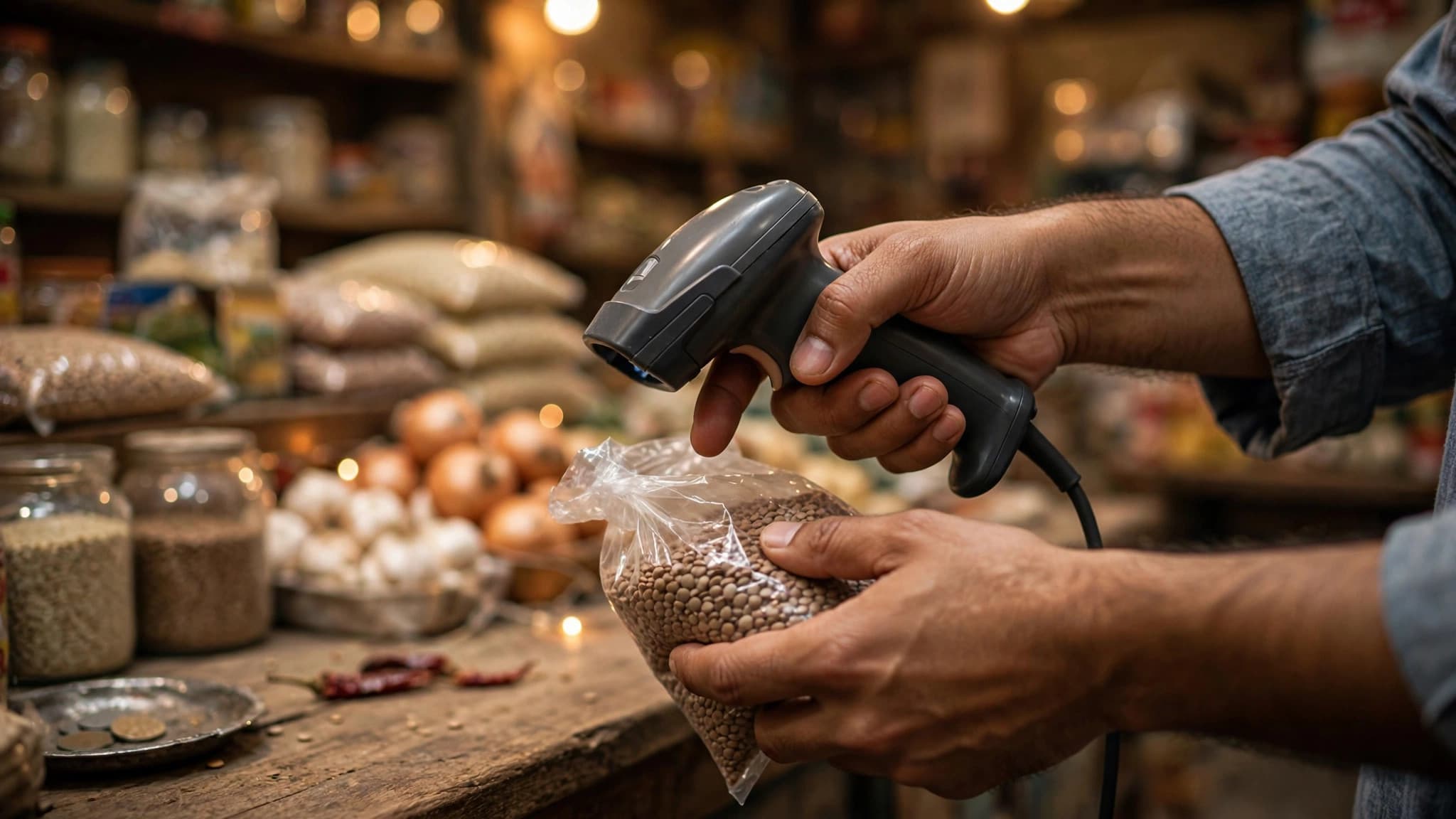
Walk into any busy kiryana store at 7pm and you will see the same scene: a queue at the counter, the shopkeeper squinting at tiny price tags, typing prices from memory, and the customer waiting. A USB barcode scanner — the small gun-shaped device that beeps — costs roughly Rs 3,000 to 5,000. Here is the honest math on whether it earns that back.
Speed: the queue moves twice as fast
Typing a price takes five to ten seconds per item when you include finding the tag and double-checking. Scanning takes about one second. On a basket of 15 items, that is the difference between a two-minute bill and a 30-second one. Shorter queues mean fewer customers who walk away — and every shopkeeper knows the customer who leaves the queue rarely comes back the same week.
Fewer pricing mistakes
Manual billing has two expensive errors. The first is undercharging: you remember the old price of cooking oil, not the new one, and the difference comes out of your margin. The second is overcharging: the customer catches it, and now they trust your shop a little less. A scanner pulls the price from your system every time, so the price on the shelf and the price on the bill always agree — as long as your system prices are up to date.
“A scanner does not set your prices. It enforces the prices you already decided — consistently, every single bill.”
Stock accuracy without the headache
Every scan is also a stock deduction. When items leave through the scanner, your stock numbers stay honest without anyone counting at night. That means fewer “we're out of stock” surprises on fast-moving items and less dead money sitting in over-ordered slow movers.
The 30-day math
Say a scanner costs Rs 4,000. If it saves you from just two pricing mistakes a day — a Rs 50 undercharge here, a Rs 70 one there — that is roughly Rs 120 a day, or Rs 3,600 a month. Add the customers who no longer abandon the queue, and most busy shops cross the payback line within a month. Quieter shops take a little longer, but the error reduction alone usually justifies it.
What a scanner will not fix
Honesty matters here. A scanner cannot fix wrong prices in your system — garbage in, beep out. It cannot stop theft on its own, and it will not help if half your items (loose atta, fresh sabzi) have no barcodes. Think of it as a fast, accurate cashier's hand — not a manager.
- Start with one USB scanner at your busiest counter — no software changes needed.
- Print your own barcodes for items that don't have them (most billing software, including SendBill, can do this).
- Update your selling prices in the system the day your supplier changes them.