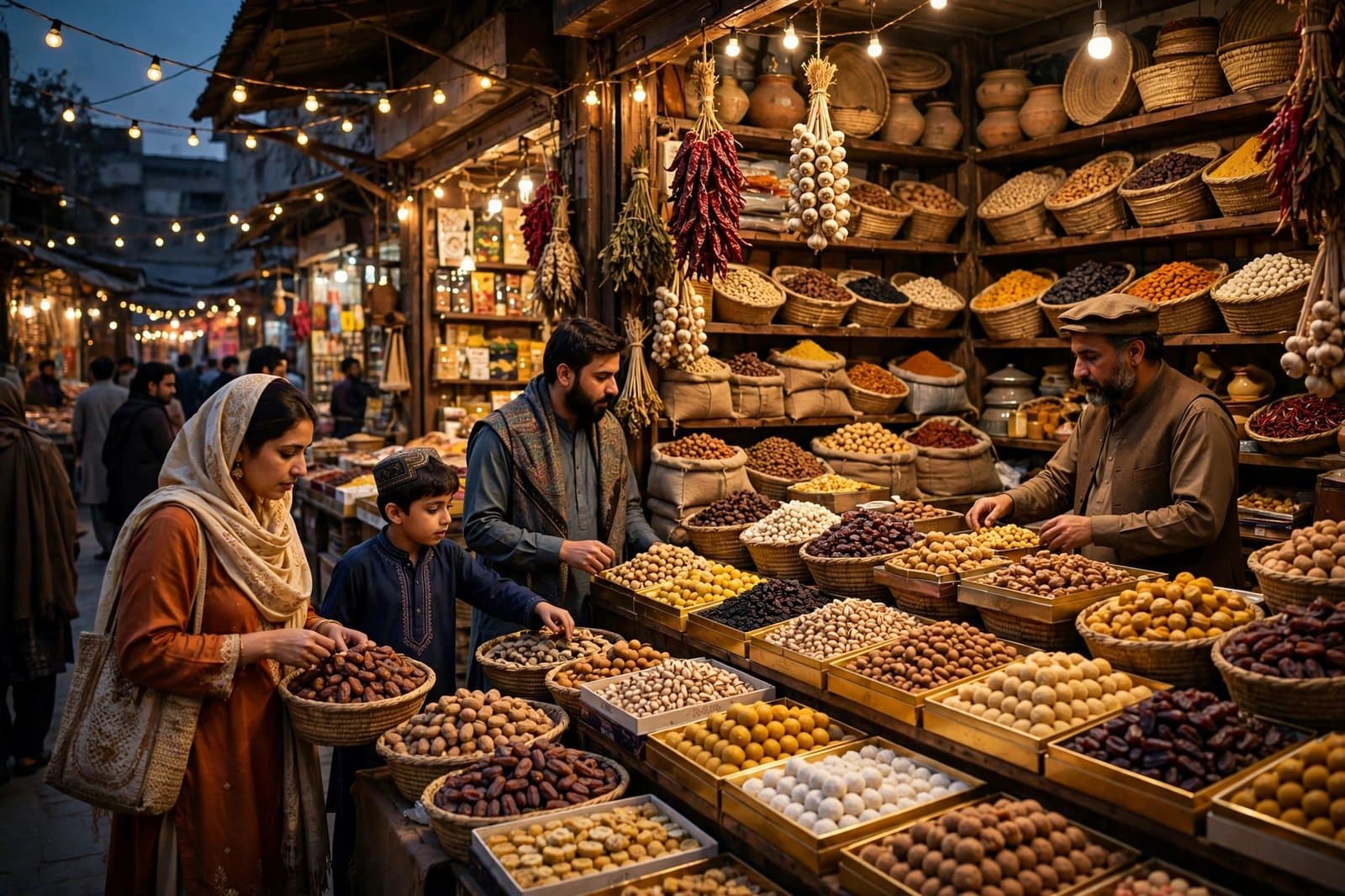
For most Pakistani retailers, Ramadan and the two Eids are not just busy periods — they are the periods that decide the year. A kiryana store can do a month's sales in the last ten days of Ramadan; a clothing or sweets shop lives off Eid season. The difference between shops that thrive in the rush and shops that merely survive it is rarely luck. It is preparation, done weeks before the crowds arrive.
Start early. By the time the rush is visible, wholesale prices have already risen and distributors are already prioritising their biggest buyers. The shop that ordered in advance bought at normal prices; the shop that orders during the rush pays the season premium and still faces stockouts.
Stock the fast movers first — and early
Every shop has a seasonal top 20: for a kiryana store it is ghee, cooking oil, sugar, flour, dates, dry fruits, sharbat, vermicelli; for others it shifts, but the principle is identical. Pull last year's seasonal sales if you have them; if not, write down from memory what ran out first last time. Order those items three to four weeks before the peak, in quantities 50–100% above normal. Running out of your fastest mover during the biggest week of the year is the most expensive stockout there is — the customer does not wait, they walk to the next shop.
- Order seasonal stock before prices rise — distributors raise rates as demand peaks.
- Do not over-order slow items just because “everything sells in season” — it does not, and January finds you with dead stock.
- Keep backup supplier numbers handy; your main distributor may run dry on the exact items everyone wants.
- Check expiry dates on everything you buy for the season — short-dated stock bought in bulk is a post-Eid write-off.
Cash: the float and the cushion
Two cash preparations matter. First, the float: keep far more small change and small notes than usual — nothing kills a rush-hour sale like making a customer wait while you hunt for change. Visit the bank a day before the peak days. Second, the cushion: supplier payments, staff overtime, and utility bills all land during the season. Keep a reserve so you are never choosing between paying the supplier and stocking the shelf.
“In the rush, speed is service. Every minute a customer waits is a minute they consider the shop across the street.”
Staffing: plan the people, not just the products
If you need temporary help, hire and train them before the rush, not during it. A helper who starts on the busiest day is a liability; one who started two weeks earlier and learned the prices, the shelf layout, and the billing is an asset. Give everyone clear roles for peak hours: one person on billing, one on bagging and restocking, one handling customer questions. And take care of your people — the staff who survive Eid season with you remember how you treated them.
During the rush: protect the top 20
Once the season starts, your job shifts from preparation to protection. Check your top 20 items daily — a quick glance at the shelf and the stock record each morning. Reorder the moment something dips below a week's cover, not when the shelf is empty. Keep the entrance and counter clear; a crowded, blocked shop turns away more customers than a slightly higher price ever would.
After the peak: clear it fast
Seasonal leftovers lose value every week after the festival. Do not let them melt into regular stock and quietly expire. Bundle them, discount them clearly, put them in a visible clearance corner — convert them back to cash while they still have some seasonal glow. The goal of seasonal stocking is to sell through, not to admire full shelves in the quiet weeks after.