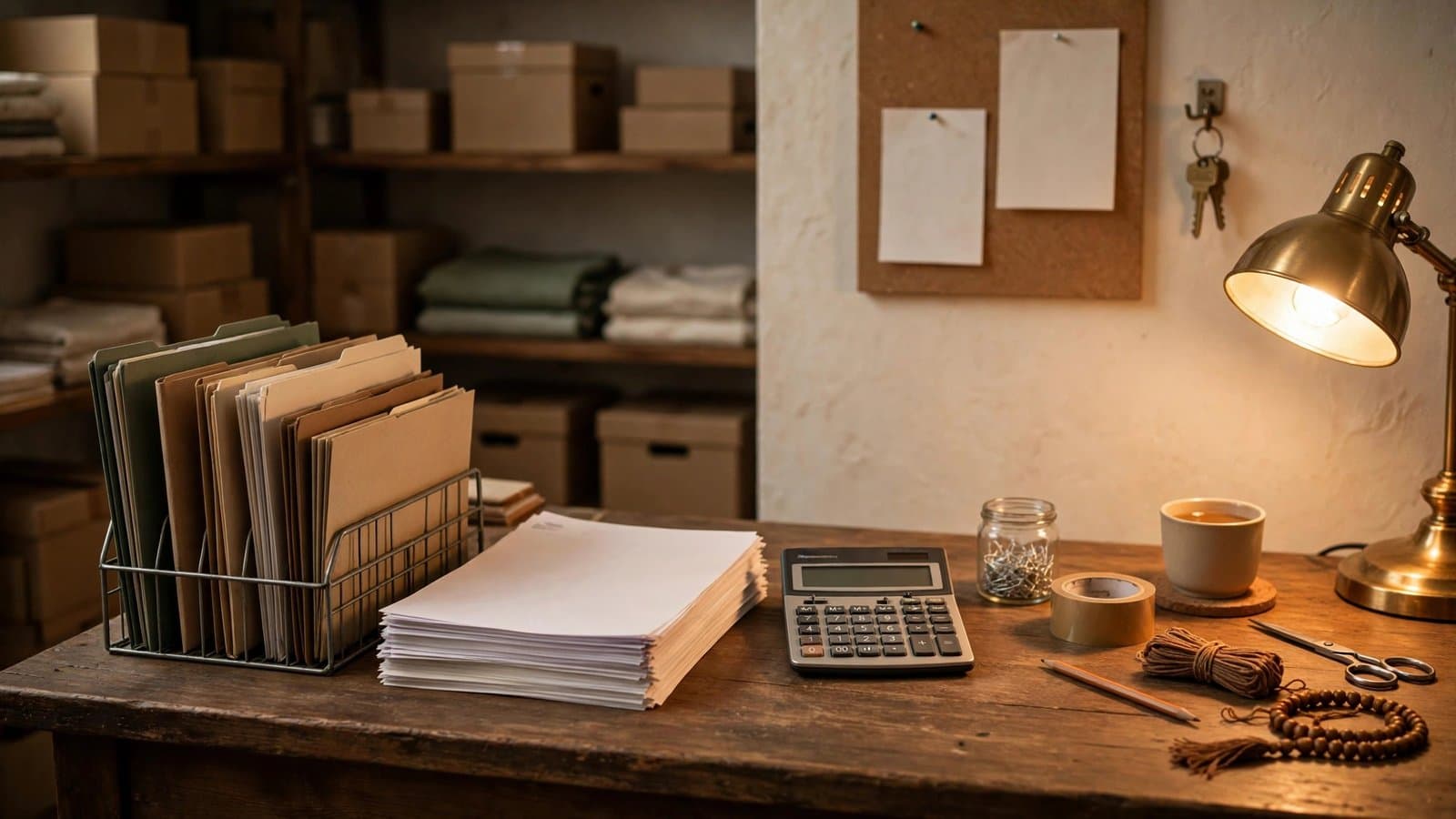
Mention taxes to a small shopkeeper and you will usually get one of two reactions: panic, or a shrug and “mera munshi dekhta hai.” Both are risky. Here is the reframe that changes everything: keep records for yourself first. The daily sales summary that tells you your best day of the week, the purchase file that settles a supplier dispute, the expense record that shows where the money goes — these are business tools. That they also happen to be exactly what tax compliance requires is a bonus.
An important honesty note before we go further: this article is about record-keeping habits, not tax law. FBR rules, thresholds, and filing requirements change, and they depend on your specific situation — turnover, business structure, location. For anything about what you owe or must file, consult a qualified tax consultant. Do not take tax positions from a blog, including this one. What a blog can do is make sure that when you do sit with a consultant, you arrive with clean records instead of a shoebox of faded receipts.
The four records every shop should keep
You do not need an accounting department. You need four consistent records:
- Daily sales summary: one line per day — date, total sales, and ideally cash vs credit split. This is the single most valuable record in your shop, for taxes and for management.
- Purchase invoices: every stock purchase, filed by month. This proves your costs, supports your margins, and is the first thing anyone asks for in a dispute or an audit.
- Expense receipts: rent, salaries, utilities, transport, repairs — every business expense with a receipt, in one monthly file. Unrecorded expenses are profit you cannot prove you spent.
- Bank statements: if the business uses a bank account (and it should, even a simple one), keep the statements. They corroborate everything above.
A filing system that takes five minutes
Complexity is the enemy — the best system is the one you will actually maintain. Get twelve large envelopes or a simple file with dividers, one per month. Every purchase invoice and expense receipt goes into the current month's section the day it arrives. The daily sales summary lives in one notebook or, better, is generated by your billing software at closing. At month end, close the envelope and start the next. That is the whole system, and it beats 90% of what is out there.
“The tax consultant's first question is always the same: “records kahan hain?” The shops that can answer it pay less, argue less, and sleep better.”
What clean books buy you (beyond compliance)
Here is what surprises most shopkeepers: the same records that satisfy the tax authorities also unlock things you actually want. A bank deciding on a business loan, a distributor considering you for a dealership, a potential partner evaluating your shop — they all ask for the same thing: evidence. Clean, consistent records turn “trust me, the shop does well” into numbers anyone can verify. Your books are your business's CV.
They also protect you in the disputes that are far more common than audits: the supplier who claims you owe more than you paid, the partner who remembers the profit differently, the landlord with a creative memory of the rent agreement. Paper — or a digital record — ends arguments that memory cannot.
Digital makes this nearly automatic
This is the quiet superpower of billing software: the daily sales summary generates itself, purchase entries are timestamped and searchable, and nothing fades, tears, or gets lost in a drawer. You still file the physical purchase invoices — keep doing that — but the core record-keeping happens as a side effect of billing, not as extra work at midnight. The shops with the best records are usually not the most disciplined; they are the ones whose system does the remembering.